






Nigeria and Australia have pledged to deepen bilateral relations through parliamentary diplomacy, economic partnerships, democratic governance and cooperation in key sectors.
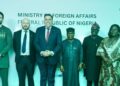
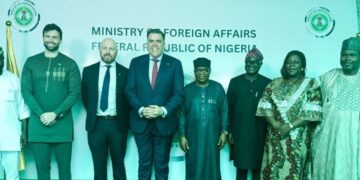
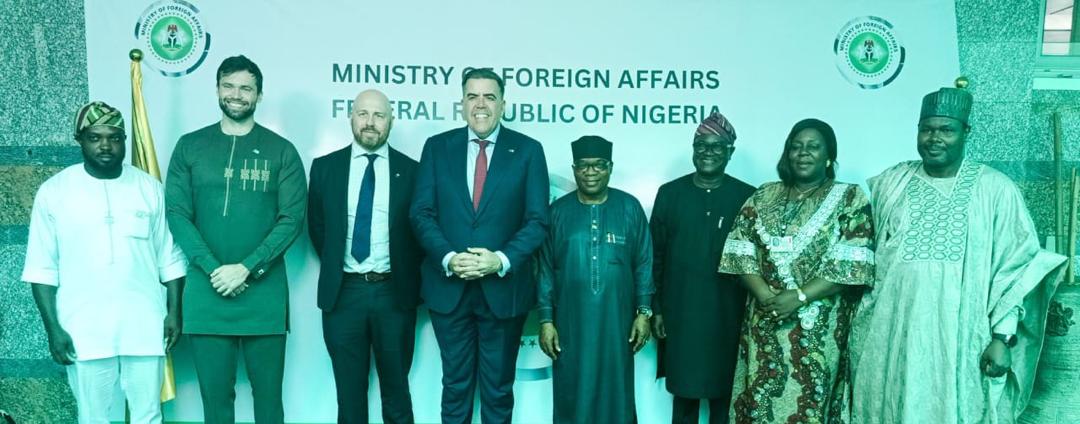
The commitment was reaffirmed when the Minister of State for Foreign Affairs, Ambassador Sola Enikanolaiye, received the Speaker of Australia’s House of Representatives, Milton Dick, at the Ministry of Foreign Affairs in Abuja.
In a statement by the Ministry’s spokesperson, Oluwafemi Adeniyi, Enikanolaiye said geographical distance should not limit closer engagement between the two countries, given their shared commitment to strengthening bilateral relations.
The minister recalled Australia’s support for Nigeria’s pro-democracy struggle under the Commonwealth during the years of military rule, while appreciating Australia’s acceptance of Nigeria’s High Commissioner, Ambassador Femi Pedro.
He said stronger diplomatic communication would facilitate increased exchanges and create opportunities for mutually beneficial cooperation.
Enikanolaiye noted that Nigeria-Australia relations had significant untapped potential, urging both countries to convert their cordial ties into structured economic partnerships with tangible benefits for their citizens.
He identified critical minerals as a major area for collaboration, particularly in technology transfer, value addition and mineral beneficiation.
The minister also highlighted agriculture and livestock development as areas with opportunities for deeper cooperation, noting that Australia’s expertise in agro-processing and export-oriented livestock production could support Nigeria’s development priorities.
He described parliamentary diplomacy as an important avenue for strengthening people-to-people relations and advancing shared interests.
Dick described his visit to Nigeria as both a personal and institutional privilege, recognising the country’s position as Africa’s most populous nation and an emerging economic powerhouse.
The Australian Speaker said both countries shared similarities in their parliamentary systems, commitment to democracy and cultural diversity, while also cooperating in areas including climate adaptation and food security.
He disclosed that a Nigerian Parliamentary Friendship Group had been established to promote legislative cooperation and institutional exchanges between the two countries.
Dick also commended Nigerians living in Australia for their contributions, stressing the role of education in promoting cultural understanding and stronger people-to-people relations.
He said expanded economic cooperation, particularly in Nigeria’s mining sector, could further strengthen bilateral ties.
The meeting also featured discussions on Dick’s candidacy for the presidency of the Inter-Parliamentary Union, with the Australian Speaker outlining his vision for a more inclusive and equitable organisation.
The two sides exchanged views on climate action, conflict prevention and resolution, as well as the challenges facing internally displaced persons in Nigeria.
Enikanolaiye stressed that democratic governance should translate into improved socio-economic conditions and human security, which he said were essential to strengthening democratic institutions.
He also advocated a development-oriented approach to migration, saying it should not be criminalised but recognised for its potential benefits to both countries of origin and destination.
The minister reaffirmed Nigeria’s commitment to pursuing a foreign policy based on strategic autonomy, constructive engagement with international partners and the protection of national interests.
Both sides expressed confidence that expanded cooperation across political, economic and social sectors would further strengthen Nigeria-Australia relations and promote shared prosperity.