



















By Emmanuel Nduka
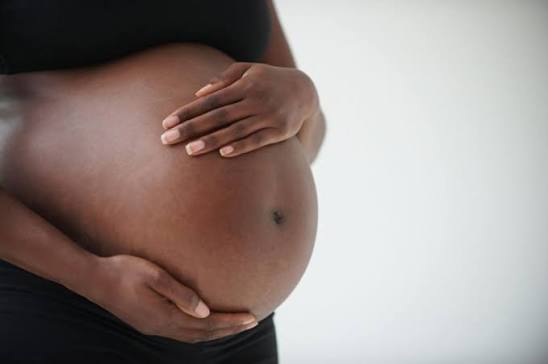
As South Africa grapples with renewed tensions over xenophobia and the treatment of foreign nationals, another deeply troubling crisis is unfolding within its borders. New figures from the Western Cape have revealed a shocking surge in pregnancies among children, exposing a grim reality of sexual abuse, exploitation, and systemic failures in protecting the country’s most vulnerable citizens.
A total of 296 pregnancies were recorded among girls aged between 10 and 14 in the Western Cape during the 2024/25 financial year, sparking outrage from political leaders, child rights advocates, and gender-based violence organisations who are demanding urgent intervention and criminal investigations.
The figures, released by the Western Cape Department of Health and Wellness and shared by Democratic Alliance (DA) Western Cape spokesperson on Social Development, Wendy Kaizer-Philander, have reignited concerns over the growing number of children becoming victims of sexual violence.
Describing the situation as deeply alarming, Kaizer-Philander stressed that pregnancies involving children in this age bracket should never be viewed as ordinary teenage pregnancies but as potential criminal cases requiring immediate law enforcement action.
“An alarming 296 pregnancies were recorded among girls aged 10 to 14 years in the Western Cape during the 2024/25 financial year,” she said.
“When a child as young as 10 years old presents as pregnant, there can be no ambiguity: this is evidence of child sexual abuse and, at a minimum, statutory rape,” she added.
She insisted that every such case must be reported to the South African Police Service (SAPS) and investigated without delay, in line with legal requirements.
“The DA is unequivocal in its position that children must be protected, perpetrators must be held accountable, and every institution with a legal duty to act must do so without hesitation.
“Failure to report, investigate and prosecute cases of child rape and statutory rape not only denies victims justice but also encourages a culture of impunity for perpetrators,” she noted.
Kaizer-Philander further disclosed that the Western Cape Legislature’s Standing Committee on Social Development would summon the Departments of Social Development, Education, and Health and Wellness, alongside the National Prosecuting Authority (NPA) and SAPS’ Family Violence, Child Protection and Sexual Offences (FCS) Unit, to account for the disturbing trend and outline measures being taken to address it.
Children’s rights organization Ilitha Labantu has also raised alarm over the statistics, warning that public discussions often misrepresent the gravity of the crisis.
According to the organization’s representative, Siya Monakali, categorizing such incidents broadly as “teenage pregnancies” risks masking the true nature of what is happening.
“While these figures have generated public concern, we are equally concerned by the manner in which they are often framed in public discourse,” Monakali said. “Too often, pregnancies involving children are discussed under the broad category of teenage pregnancy, a term that risks obscuring the reality of what these statistics represent. These are not simply teenage pregnancies. These are children,” he added.
He argued that children between the ages of 10 and 14 should never be grouped together with older adolescents in discussions surrounding pregnancy.
“A child aged 10, 11, 12, 13 or 14 years cannot be viewed through the same lens as older adolescents when discussing pregnancy,” he said.
Monakali maintained that every case should be treated as a possible incident of child sexual abuse, coercion, or exploitation and handled through both child protection structures and the criminal justice system.
“As a country, we must be careful not to normalise or sanitise what should be treated as a child protection emergency. The real story is not that children are becoming pregnant. The real story is that children are being violated.”
The revelations come amid broader concerns about rising adolescent pregnancies across the province. Data from the Western Cape Department of Health and Wellness show that deliveries among girls aged 11 to 19 have risen sharply over the past three financial years.
The department recorded 8,114 deliveries in the 2022/23 financial year. That figure climbed to 9,938 in 2023/24 before increasing again to 10,277 in 2024/25, representing an overall rise of 26.66 percent.
For campaigners, the statistics underscore a growing child protection crisis that demands more than public concern. They say the numbers point to an urgent need for stronger law enforcement, improved safeguarding mechanisms, and a national commitment to confronting the sexual abuse of children before more young lives are irreparably damaged.