





By Enyichukwu Enemanna
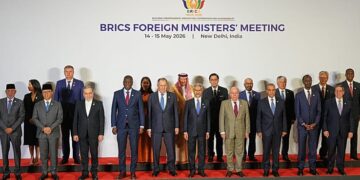
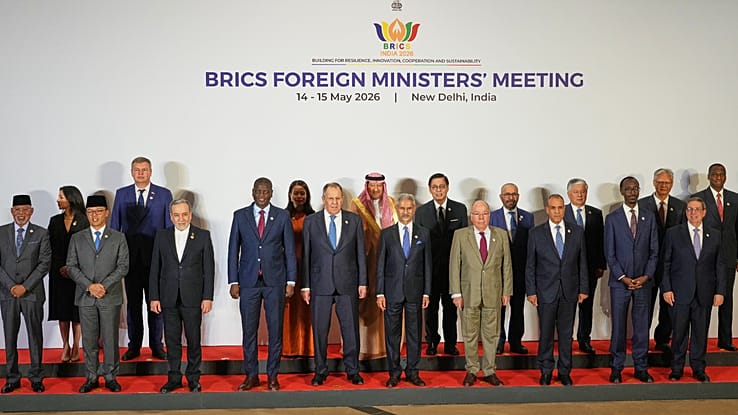
Foreign ministers from the BRICS group of emerging economies on Thursday commenced a two-day meeting in the Indian capital, New Delhi, amidst divisions in the bloc over the war in Iran, rising energy cost, and growing global uncertainty.
In attendance include diplomats from founding members — Brazil, Russia, India, China and South Africa, alongside newer member countries.
At the top of their agenda include, economic cooperation and ways to coordinate their positions on key global issues.
In his opening remarks, Indian Foreign Minister, Subrahmanyam Jaishankar, said peace and security issues remain central to global order.
“We meet at a time of considerable flux in international relations. Ongoing conflicts, economic uncertainties, and challenges in trade, technology, and climate are shaping the global landscape,” he said.
He added, “There is a growing expectation, particularly from emerging markets and developing countries, that BRICS will play a constructive and stabilising role.”
Jaishankar called for “safe, unimpeded maritime flows” through international waters, as the Strait of Hormuz remains under blockade, saying they remain vital for global economic wellbeing.
Iran’s foreign minister, Abbas Araghchi, meanwhile called on members to condemn the US and Israel’s “unlawful aggression” against Tehran.
His remarks come as the Washington and Tehran trade threats amid a ceasefire teetering on the brink of collapse.
The war has had far-reaching global repercussions, with BRICS countries also affected.
Founded by Brazil, Russia, India and China, BRICS was formed as a grouping of major emerging economies seen as a counterbalance to Western-led institutions such as the G7.
South Africa joined in 2010 and the bloc expanded further in 2024 with the addition of Egypt, Ethiopia, Iran, and the United Arab Emirates. Indonesia became a full member in 2025. It has also admitted partner nations.