






By Emmanuel Nduka
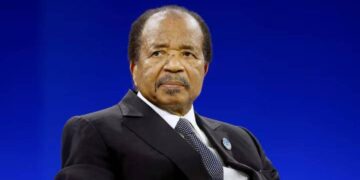
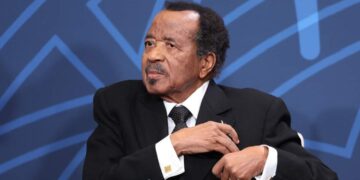
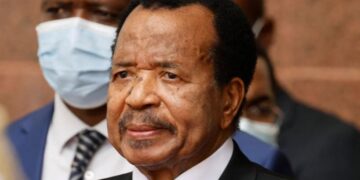
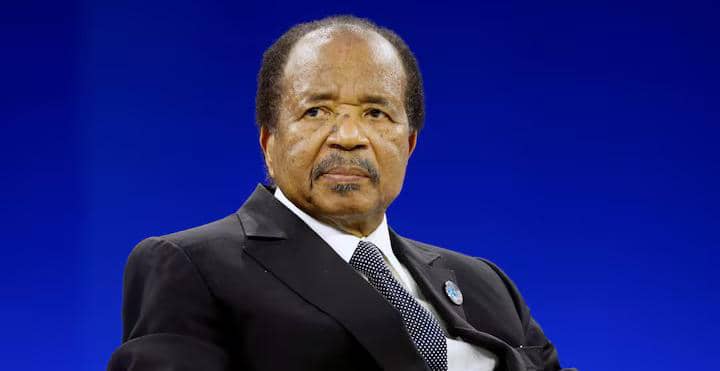
Cameroon has since announced a major reshuffle within its armed forces, with President Paul Biya approving a series of promotions and strategic appointments that analysts say reinforce his grip on the country’s security apparatus amid his prolonged absence from public view.
Top Military Promotions Announced
The changes, contained in presidential decrees issued on August 3, saw five colonels elevated to the rank of brigadier general, the highest military rank in the country. Among the most prominent is Raymond Jean Charles Beko’o Abondo, commander of the Presidential Guard, whose promotion further strengthens the leadership of the elite unit responsible for the president’s security.
The other newly promoted brigadier generals are Mesmin Magloire Aristide Eloundou, deputy director of the General Directorate for External Research; Oumar Nchankou Mbouombouo Njindam, deputy chief of operations at the Armed Forces General Staff; Wilson Epié Ngome, commander of the 21st Surface-to-Air Artillery Regiment in Edéa; and Elie Romance Mezui Zo’o, commander of the Rapid Intervention Brigade in Bafoussam.
Defence Leadership Reshaped
Beyond the promotions, Biya also carried out a significant reorganisation within the Ministry of Defence by appointing Major General Hypolite Ebaka as Major General of the Armed Forces while retaining his current position as Major General of the Army. Ebaka replaces General Hector Marie Tchemo, who retired on July 28, making him the second-highest-ranking military officer after Armed Forces Chief of Staff, General René Claude Meka.
The appointment is widely viewed as positioning Ebaka to assume greater influence within the military hierarchy, particularly as General Meka has reportedly been absent from active duty since the first quarter of 2026 due to health concerns.
A Show of Authority Amid Growing Speculation
The reshuffle comes as President Biya has not been seen in public since departing Cameroon on June 7, prompting persistent speculation over his health and political future. Despite his absence, the latest military appointments are seen by many observers as a demonstration that the veteran leader remains firmly in control of the country’s defence and security institutions.
Ethnic Balance Under Fresh Scrutiny
The promotions have also sparked renewed debate over ethnic representation within the armed forces. According to local observers, about 60 per cent of the newly promoted officers are from the Beti ethnic group, to which Biya belongs, fuelling claims of continued ethnic dominance in key military positions.
Strengthening the Presidential Security Circle
The latest shake-up also consolidates the president’s inner security circle, with four senior generals now occupying the country’s most sensitive security posts. They include Emmanuel Amougou, head of the President’s Special Military Staff; Ivo Desancio Denwo, Director of Presidential Security; Joseph Fouda, Special Adviser to the President; and Raymond Jean Charles Beko’o Abondo, now commander of the Presidential Guard.
What It Means for Cameroon
Biya, who has been in power since 1982, is Africa’s longest-serving head of state. His prolonged absence from public engagements has fuelled questions over the country’s political succession, while the latest military reshuffle underscores the central role of the armed forces in preserving the stability of his administration.