











By Ebi Kesiena
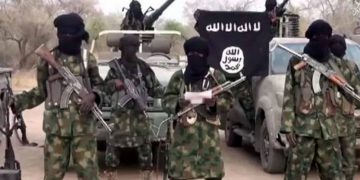
The United Nations Security Council has called for stronger international backing for African countries battling terrorism, warning that the Islamic State remains one of the continent’s most serious security threats.
The call came during a Security Council briefing on the activities of the Islamic State in Iraq and the Levant, where members warned that extremist groups continue to expand across the Sahel, the Lake Chad Basin and parts of Central Africa despite sustained counter-terrorism operations.
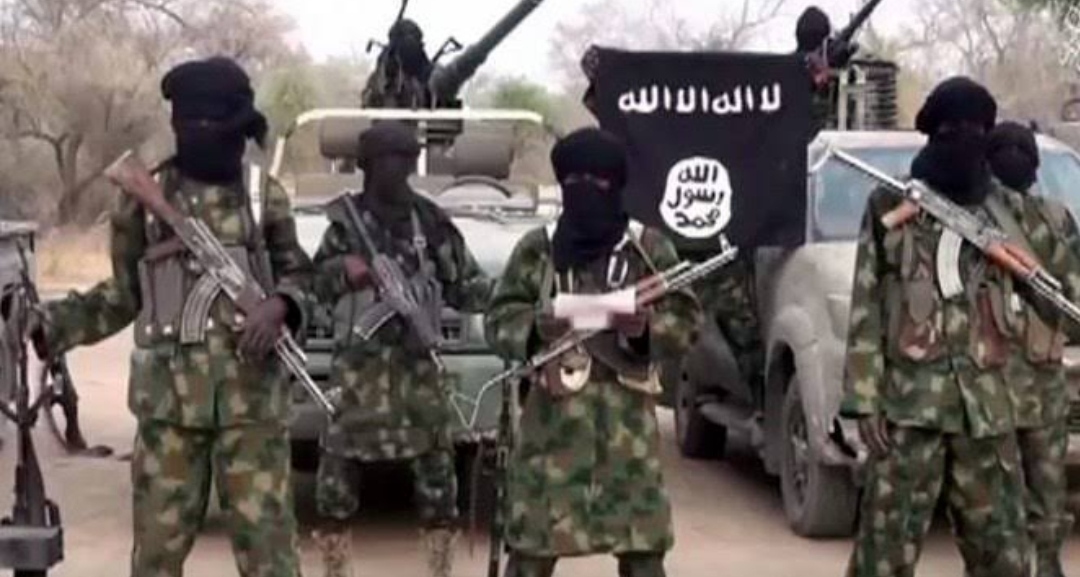
Presenting the UN Secretary-General’s 23rd report on ISIL, Oguljeren Niyazberdiyeva, Chief of the Office of the Under-Secretary-General for Counter-Terrorism, said Africa continues to shoulder the greatest burden of the group’s activities, identifying the Islamic State West Africa Province (ISWAP) as the most active ISIL affiliate worldwide.
She noted that while international counter-terrorism efforts had disrupted the group’s senior leadership and weakened its central command, ISIL had adapted by operating through decentralised networks united by a common extremist ideology.
“In spite of international efforts, Da’esh continues to pose a serious threat to international peace and security,” Niyazberdiyeva said.
She added that the group was increasingly exploiting artificial intelligence, encrypted communications, virtual assets, drones and other emerging technologies to recruit members, raise funds and coordinate attacks across borders.
According to her, terrorist organisations continue to thrive by exploiting weak governance, fragile security institutions, prolonged conflicts, poverty and political instability, underscoring the need for sustained international cooperation to prevent the group from regaining strength.
During the debate, Liberia’s Permanent Representative to the UN, Lewis Brown, warned that sub-Saharan Africa now accounts for more than half of global terrorism-related deaths.
He said terrorist groups operating in the Sahel were no longer seeking only to destabilise governments but were attempting to replace them entirely, while also expanding towards coastal West African states.
“A threat that adapts faster than our response will inevitably expand to consume all of us,” Brown warned, calling for stronger border intelligence, enhanced operational capabilities and closer regional security cooperation.
Somalia’s representative urged the international community to strengthen national ownership of counter-terrorism programmes, while the Democratic Republic of the Congo’s Deputy Permanent Representative, Jocelyne Lukundula, appealed for greater global support for Africa’s anti-terrorism efforts.
“Without constant vigilance and international cooperation, no region will be spared in the long term,” Lukundula said.
Council members also expressed concern over the growing threat posed by foreign terrorist fighters, online radicalisation, organised crime and the increasing use of emerging technologies by extremist groups. They stressed that defeating terrorism would require coordinated military, political, economic and social strategies tailored to the realities of affected communities.