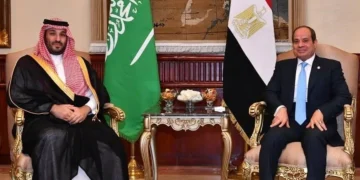












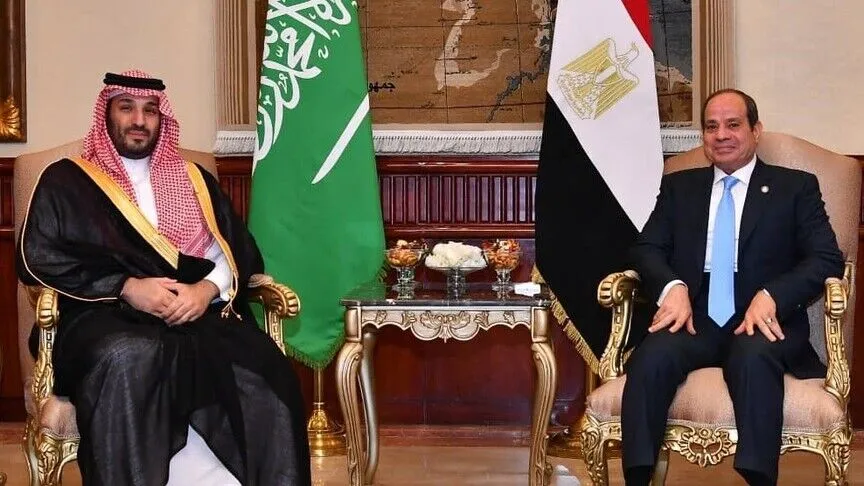
Egyptian President Abdel Fattah el-Sisi and Saudi Crown Prince Mohammed bin Salman have called for urgent de-escalation of rising tensions across the Middle East, warning of the potential consequences for regional peace, energy security, global supply chains and international trade.
The two leaders made the call during a telephone conversation on Thursday, during which they reviewed a range of regional and international developments, according to a statement from the Egyptian presidency.
Both leaders stressed the need to contain the escalating tensions, particularly in view of their growing impact on energy security and disruptions to regional and global supply chains and trade.
Sisi reaffirmed the strong relationship between Egypt and Saudi Arabia, describing the two countries as sharing a common destiny and underscoring the importance of closer cooperation in confronting the challenges facing the region.
The Egyptian president also reiterated Cairo’s position that the security of Saudi Arabia and other Arab countries forms an extension of Egypt’s own national security.
For his part, Crown Prince Mohammed bin Salman emphasised the importance of strengthening coordination between Cairo and Riyadh. He praised the close cooperation between the two countries and said continued engagement was vital to promoting peace and stability across the Middle East.
The leaders also discussed ways of strengthening bilateral relations, with both sides reaffirming their commitment to expanding cooperation across various sectors and encouraging more high-level exchanges between the two countries.
The discussions came as tensions across the Middle East continue to escalate following a reported US strike on Iran’s Larak Island on August 30, which ended a period of relative calm in direct hostilities.
Iran subsequently launched missiles and drones targeting US military facilities across the region, including bases in Kuwait and the United Arab Emirates, according to the report.
Tehran has also maintained restrictions on navigation through the Strait of Hormuz, linking the reopening of the strategic waterway to Washington fulfilling commitments under an earlier understanding between the two sides.
Meanwhile, the United States has intensified economic pressure on Iran through what it describes as “Operation Economic Outcast,” targeting the country’s oil revenues and other financial channels alongside ongoing military operations.
The latest developments have heightened concerns over the possibility of a wider regional conflict, with Egypt and Saudi Arabia now pushing for greater diplomatic engagement and coordinated efforts to prevent further escalation and safeguard regional stability.