












By Emmanuel Nduka
France has been left counting the cost of widespread violence after protests against rising living costs descended into riots, looting and arson, leaving shops vandalized, public buildings damaged and streets littered with debris across several cities.
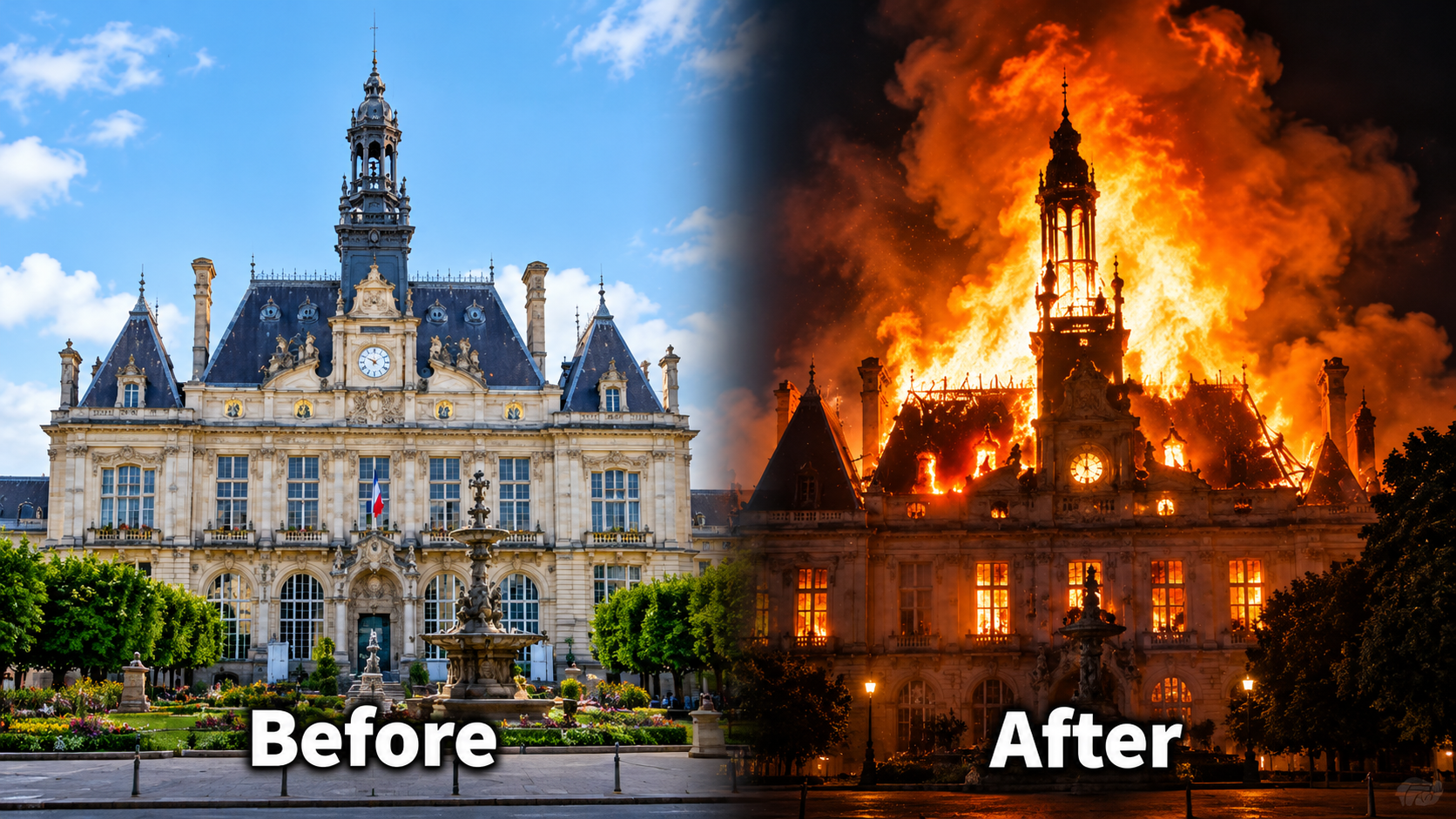
More than 500,000 people participated in nationwide demonstrations on Saturday, with Paris, Marseille, Bordeaux, Limoges and Nice among the cities hit by violent clashes between protesters and security forces. The unrest continued into the night, with groups of demonstrators attacking businesses and setting buildings ablaze.
Prime Minister Sébastien Lecornu condemned what he described as the “extreme intensity” of the violence, saying 1,200 people had been arrested and 150 police officers injured. In the southern city of Saint-Etienne, a 17-year-old boy lost his right hand after a crowd-control grenade exploded, according to reports.
The demonstrations followed weeks of student protests and growing public discontent over the cost of living and deteriorating public services. The unrest has also heightened political tensions in France, coming approximately six months before the country’s next presidential election.
The violence has triggered competing political interpretations, with US Vice President JD Vance blaming immigration and what he described as “problems of assimilation” in a social media post, without providing evidence to support the claim.
French far-right leader Marine Le Pen also accused the party of her political rival, Jean-Luc Mélenchon, of having “legitimised the violence.”
Mélenchon, whose political movement supported the demonstrations, urged protesters to reject looting, describing it as “contrary to our methods.”
President Emmanuel Macron, meanwhile, vowed that those responsible for vandalism, attacks on public institutions and businesses, and looting would face prosecution and punishment.
The unrest has intensified scrutiny of the French government’s response to mounting economic pressures and public dissatisfaction, while raising fresh concerns about public order and the political consequences of the demonstrations ahead of the presidential election.