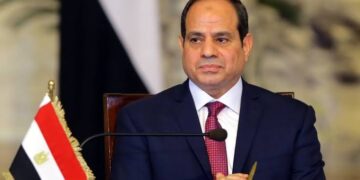


















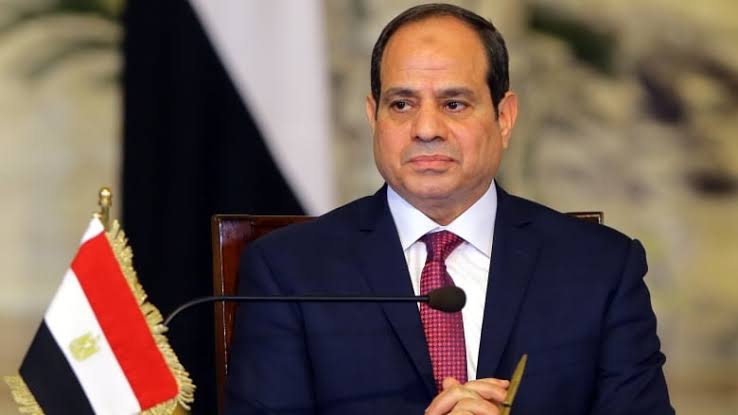
Egyptian President Abdel Fattah al-Sisi has said he will leave office when his current presidential term ends in 2030, declaring that the issue is “completely settled” and ruling out any further extension of his presidency.
Sisi, 71, made the statement on Saturday while addressing graduates at a ceremony at the Egyptian Military Academy in the New Administrative Capital, a major development project launched under his administration.
“The period leading up to 2030 will be the end of my term as president of the state, if I am still alive. This is completely settled, and there will be no discussion about it,” Sisi said.
He also pledged that Egypt’s Constitution would not be amended to facilitate another term, amid speculation among critics and opposition figures that changes could be introduced to allow him to remain in power beyond 2030.
Sisi first became president in 2014 after serving as defence minister and following the military’s removal of Islamist President Mohamed Morsi in 2013. He was re-elected in 2018 and again in 2023.
Egypt’s 2014 Constitution originally limited presidents to two four-year terms. However, constitutional amendments approved in a 2019 referendum extended presidential terms to six years and included transitional provisions allowing Sisi to seek an additional term. His current six-year mandate is scheduled to end in 2030.
The president said the years leading up to 2030 would be used to prepare a new generation of national leaders. He said the Military Academy was training hundreds of potential officials, ministers and future presidential candidates in leadership and governance.
During his 12 years in office, Sisi has overseen extensive state-led infrastructure and development projects. However, his administration has faced criticism over rising public debt, economic pressures and the heavy cost of major projects.
Meanwhile, Human rights organisations have also criticised restrictions on political opposition, civil society and freedom of expression. The Egyptian government has rejected such criticism, maintaining that its policies are necessary to protect national security and stability.