





By Emmanuel Nduka
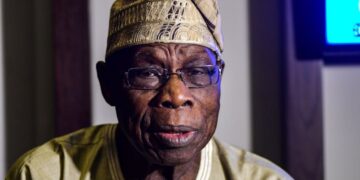
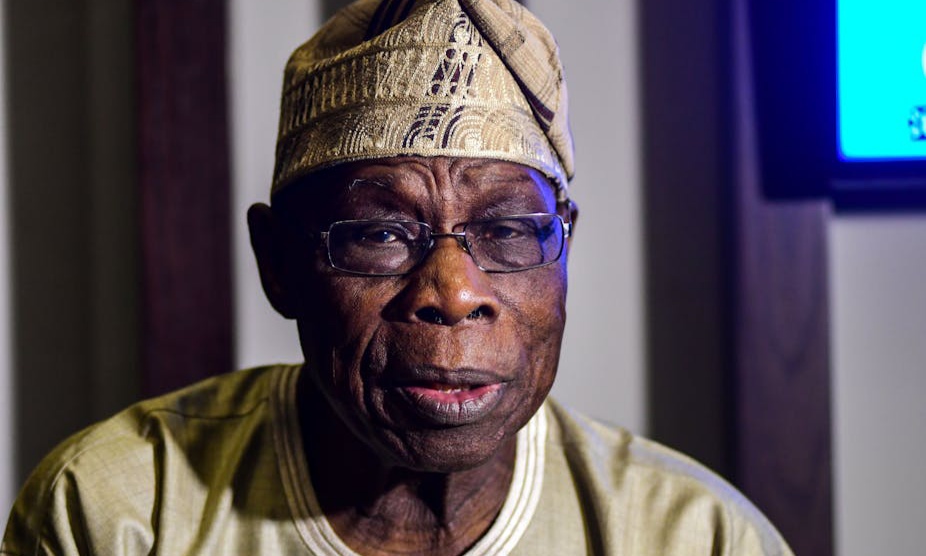
Former Nigerian President Olusegun Obasanjo has reminded South Africa of Nigeria’s historic role in the struggle against apartheid, saying the white minority system may not have ended when it did without Nigeria’s sustained support for the liberation movement.
Obasanjo made the assertion while speaking during an interview on C-Suite Cafe, hosted by Ikem Okuhu, where he reflected on Nigeria’s contribution to the liberation of southern Africa and the principles that shaped the country’s foreign policy at the time.
According to the former president, Nigeria’s opposition to apartheid was not driven by the expectation of political or economic reward, but by a conviction that no African should be treated as inferior because of the colour of their skin.
“We were not doing what we did in South Africa or in Southern Africa or decolonisation anywhere for our personal gain or for our country. We did it for our race. I believe that no black man anywhere or black person anywhere should be regarded as an inferior human being because of his colour,” Obasanjo said.
He described Nigeria’s approach as “enlightened self-interest”, arguing that the country had a responsibility to stand with Africans facing racial oppression and colonial domination.
Obasanjo said Nigeria should remain proud of the role it played in the anti-apartheid struggle, stressing that the liberation of South Africa was achieved through the combined efforts of Africans and international allies who refused to accept white minority rule.
“And for me, and I believe for Nigeria at that time and even now, we should be proud of what we did because without Nigeria, South Africa would not have got rid of apartheid when it got rid of it. That is true,” he said.
Nigeria was one of the most vocal African opponents of apartheid and provided political, diplomatic and material support to liberation movements during the struggle against white minority rule in southern Africa.
Obasanjo recalled that Nigeria worked alongside prominent African leaders including Tanzania’s Julius Nyerere, Zambia’s Kenneth Kaunda and Mozambique’s Samora Machel, while also engaging international figures in efforts to bring an end to apartheid.
He also mentioned former United States President Jimmy Carter, former British Prime Minister James Callaghan and former Swedish Prime Minister Olof Palme among international figures who were involved in efforts surrounding the struggle for majority rule in southern Africa.
Nigeria’s opposition to apartheid extended beyond diplomatic statements. The country imposed measures against institutions and companies linked to the apartheid regime and supported international campaigns for the isolation of South Africa.
Obasanjo, who was Nigeria’s military head of state between 1976 and 1979, was himself deeply involved in the country’s southern African policy. During his tenure, Nigeria intensified its opposition to white minority rule and supported liberation movements across the region.
Decades later, however, Obasanjo expressed disappointment over the treatment of Nigerians and other African migrants in post-apartheid South Africa.
His comments come amid renewed tensions between Abuja and Pretoria over recurring attacks against Nigerians and other African nationals in South Africa.
The former president condemned xenophobic violence, saying even where migrants violate immigration laws or commit crimes, such offences should be dealt with through lawful institutions rather than mob attacks.
“I do not believe that you use illegality to treat illegality, asking and encouraging area boys and area girls to break into their houses and break into their shops,” he said.
Obasanjo also rejected claims that foreigners were responsible for taking jobs from South Africans, pointing out that some migrants contribute to the economy and create employment opportunities.
The former president’s remarks come at a particularly sensitive moment in Nigeria-South Africa relations. Nigeria’s National Assembly recently suspended official legislative engagements with South Africa over persistent attacks against Nigerians and other African migrants.
Nigerian officials have said dozens of Nigerians have died in mob, hate-related and other attacks in South Africa since 2022, while hundreds more have been forced to leave amid growing concerns over their safety.
For Obasanjo, the current tensions sit uneasily beside the history of solidarity between the two countries.
Nigeria stood with South Africans when apartheid denied the majority of the population political rights, dignity and equal citizenship. Today, Obasanjo is calling on South Africa not to forget the African country that stood with its people when the struggle for freedom was still far from won.
South Africa achieved its first democratic, non-racial elections in 1994, bringing apartheid to an end and paving the way for Nelson Mandela to become the country’s first Black president.
For Nigeria, the struggle had never been merely about South Africa. It was part of a broader conviction that the liberation of one African nation strengthened the freedom and dignity of the entire continent.