






By Emmanuel Nduka
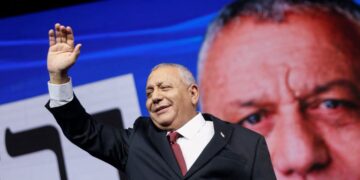
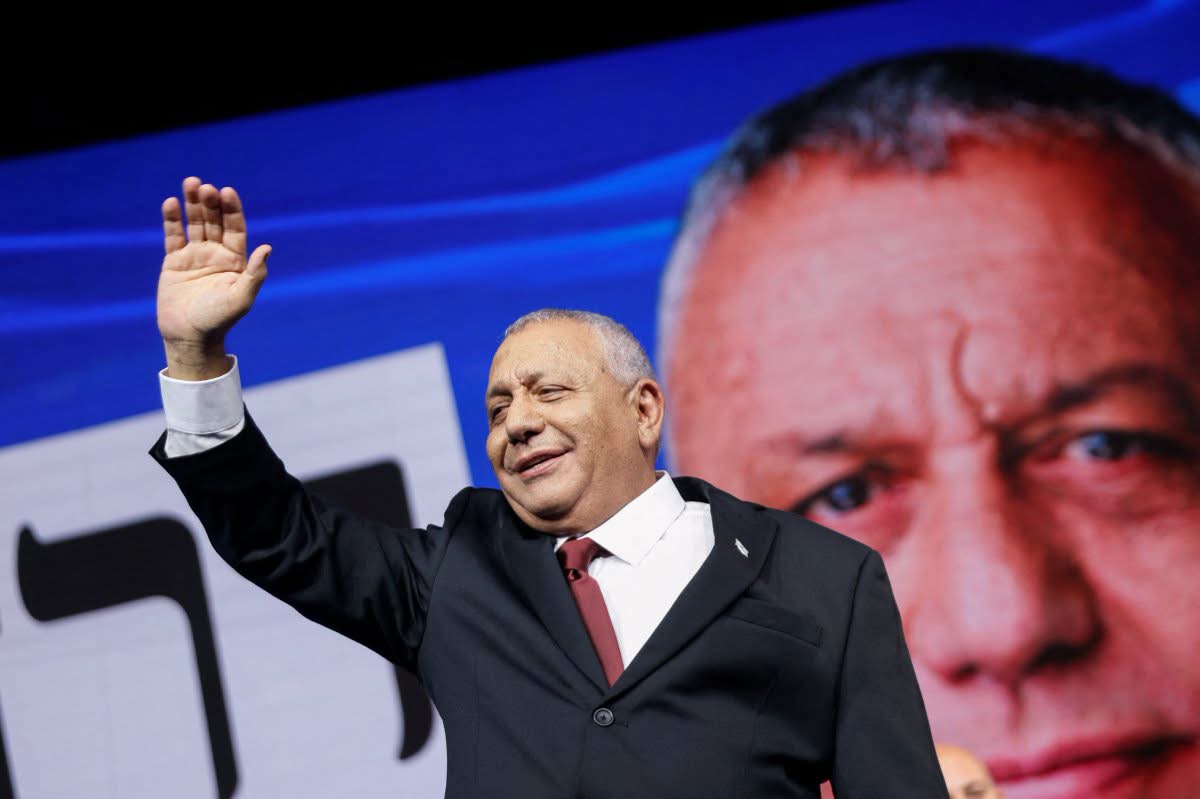
Israeli President Isaac Herzog has tasked former military chief and opposition leader Gadi Eisenkot with forming the country’s next government, handing Prime Minister Benjamin Netanyahu a major political setback following a parliamentary election that left both camps struggling to secure a governing majority.
Herzog announced his decision on Saturday after consultations with political parties elected into the 120-member Knesset, Israel’s parliament, where Eisenkot emerged with significantly broader political backing than Netanyahu.
The decision followed recommendations from lawmakers, with representatives of political factions controlling 67 parliamentary seats endorsing Eisenkot, compared with 46 who backed Netanyahu. Another faction, representing seven lawmakers, declined to recommend either candidate.
Herzog’s spokesperson confirmed that Eisenkot had been invited to the President’s Residence, where he would formally receive the mandate to form a government on Sunday.
Eisenkot, who leads the Yashar party, will have 28 days to assemble a coalition capable of commanding at least 61 seats in parliament, the minimum required to establish a government. He could receive an additional 14 days if necessary.
In his first reaction to the announcement, Eisenkot called for the formation of a national emergency government, pledging to work towards establishing an administration capable of addressing the country’s political and security challenges.
“Now is the time to form a national emergency government. I will do everything I can to ensure we are worthy,” he wrote in a post on X.
The presidential decision represents a significant challenge to Netanyahu, Israel’s longest-serving prime minister, whose religious-nationalist coalition lost its parliamentary majority in the October 27 election despite retaining the position of the largest political bloc.
Netanyahu’s Likud party secured 27 seats, while his wider coalition of religious and nationalist parties won 53 seats, falling eight short of the 61 required for a majority.
Eisenkot’s four-party alliance, comprising political groups spanning the centre-left to the right, secured 48 seats, with his Yashar party emerging as the second-largest political party with 21 seats. Meanwhile, two Arab-led political parties secured a record 19 seats, significantly altering the balance of power in the new parliament.
Although the Arab-led parties have endorsed Eisenkot, their support presents a complicated political calculation for the former military chief, who has previously expressed reservations about forming a governing alliance with them.
Their backing could nevertheless provide a pathway towards a parliamentary majority, either through a formal coalition arrangement or external support for a minority government.
Another possible route would involve negotiations with ultra-Orthodox parties, including Shas and United Torah Judaism, which have traditionally maintained close political ties with Netanyahu. However, such an arrangement could prove difficult given the ideological differences and disagreements over compulsory military service.
A unity government involving Netanyahu’s Likud party also remains a theoretical possibility, although Eisenkot has repeatedly ruled out serving in an administration alongside the outgoing prime minister.
The political contest marks another defining moment in Netanyahu’s lengthy political career, following mounting criticism of his leadership, particularly over the conduct of Israel’s military campaign in Gaza and disagreements with opposition figures over the country’s security direction.
Eisenkot, 66, served as Chief of General Staff of the Israel Defense Forces between 2015 and 2019 before entering politics in 2022. He briefly served as an observer in Netanyahu’s wartime cabinet following the October 7, 2023 Hamas attacks before becoming increasingly critical of the government’s handling of the conflict.
He has also criticised violence by Israeli settlers against Palestinians and opposed the influence of far-right political figures within Netanyahu’s coalition.
Despite his military credentials and growing political profile, Eisenkot faces a difficult task in translating the endorsements secured during Herzog’s consultations into a functional governing alliance.
If he fails to form a government within the stipulated period, another candidate could be invited to attempt the process, potentially giving Netanyahu a fresh opportunity to retain power. Should subsequent efforts also fail, Israel could be forced into another general election.
Until a new administration is successfully formed, Netanyahu will remain in office as caretaker prime minister, prolonging an already tense political transition in a country grappling with deep domestic divisions and continuing regional security challenges.