











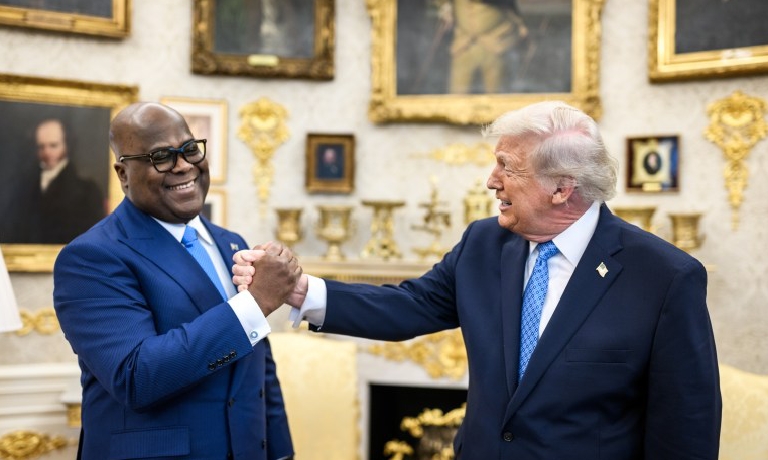
The Democratic Republic of Congo (DRC) has agreed to receive third-country nationals deported from the United States under its new arrangement with the Trump administration.
Deportation Arrangement
The Congolese government announced it will begin accepting the third-country nationals with effect from this month. The U.S. will fully fund the deportations, as facilities near Kinshasa have been prepared to host the arrivals.
Government Stance
The government described the arrangement as temporary, saying it as part of its commitment to human dignity and international solidarity.
U.S. Interests
The deal coincides with U.S. efforts to support Congo-Rwanda peace initiatives and secure access to Congolese minerals, while drawing scrutiny over rights concerns.
Regional Implications
The third-country deportation arrangements have been made with other African nations, situating Congo within a broader U.S. policy framework in the region. This linkage underscores the dual role of the deal in migration management and advancing U.S. regional objectives.
Criticisms and Concerns
Lawyers and activists have raised concerns over third-country deportation deals, noting that some host nations have repressive governments and weak judicial systems. Critics argue such agreements emphasize political deal-making over migrant protection, with some deportees holding U.S. protection orders. The Trump administration has spent at least $40 million to deport about 300 migrants to countries other than their own under this policy.
Congolese officials have not disclosed the number or nationalities of deportees, nor specific dates for their arrival flights beyond the deal commencement in April.