





















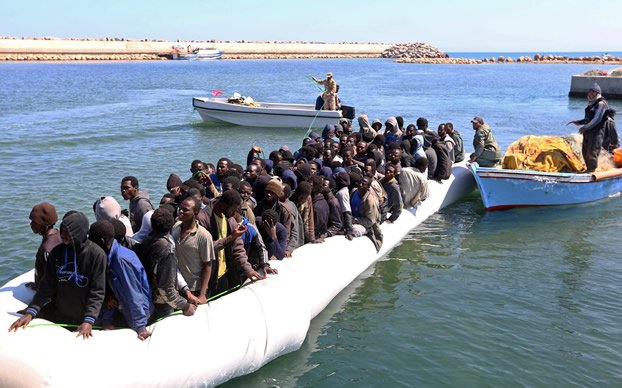
The United Nations High Commissioner for Refugees (UNHCR) has disclosed that at least 144 migrants have been reported dead or missing off the coast of Mauritania after attempting the perilous sea journey to Europe.
The agency made the announcement on Tuesday following three rescue operations carried out in Mauritania between July 14 and July 18, while urging governments to expand access to education, employment and livelihood opportunities to address the root causes of irregular migration.
According to UNHCR, 143 people died aboard a single vessel that departed Bufaloto in The Gambia and was rescued on July 18 after drifting at sea for 25 days.
The boat reached the Mauritanian port city of Nouadhibou carrying the bodies of the victims and 38 survivors, who received humanitarian assistance from UNHCR officials upon disembarkation.
Speaking at a news briefing in Geneva, UNHCR spokesperson Matt Saltmarsh said two children survived the ordeal but lost every member of their families during the voyage. He noted that the children are currently receiving medical treatment in hospital.
Saltmarsh explained that the agency could not immediately determine whether the victims died from drowning, dehydration, starvation or other causes. He added that those on board were nationals of several sub-Saharan African countries.
UNHCR also reported that another migrant was found dead on arrival aboard a separate vessel that reached Mauritania on July 14.
The agency stated that the three rescue operations conducted between July 14 and July 18 resulted in the rescue of 387 migrants.
It further noted that 17 migrant disembarkations have been recorded in Nouakchott since the beginning of 2026, with a total of 2,147 people rescued.
Although the number of migrants arriving in Europe by sea has declined this year, UNHCR warned that the death toll along migration routes remains unacceptably high.
According to UN data, more than 40,000 migrants and refugees have reached Europe by sea in 2026, compared to 65,407 recorded during the same period in 2025.
The agency stressed that despite the reduction in sea arrivals, fatalities and disappearances along the dangerous migration routes continue to pose a major humanitarian concern.