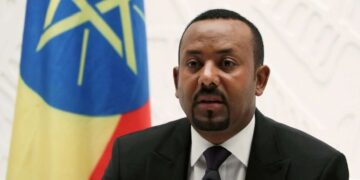











Seven Ethiopian armed and opposition groups have announced a new alliance aimed at challenging Prime Minister Abiy Ahmed’s government and establishing an inclusive transitional administration.
The groups unveiled the Ethiopian Peoples’ Forces Alliance for Survival, also known as the Alliance for Survival, in a joint statement issued on Monday.
The alliance comprises the Tigray People’s Liberation Front (TPLF), Amhara Fano National Movement, Oromo Liberation Army (OLA), Ogaden National Liberation Front (ONLF), Afar Revolutionary Democratic Unity Front, also known as Ugugumo, Benishangul Peoples’ Liberation Movement and Gumuz Peoples’ Democratic Movement.
In their statement, the groups said they had agreed to coordinate their political and other activities, settle differences peacefully and work towards replacing what they described as the government’s “personalist” and “dictatorial” system.
They proposed the creation of a transitional government operating under a transitional charter, with priorities including ending armed conflicts, protecting human and democratic rights, restoring security and facilitating an inclusive national and constitutional dialogue.
The announcement is notable because several of the groups have previously been involved in opposing sides of Ethiopia’s conflicts.
The TPLF fought federal forces during the 2020–2022 war in Tigray, while Fano, an Amhara armed movement, initially fought alongside government forces before turning against the federal government in 2023.
The OLA has also been engaged in an armed conflict with federal forces in Oromia since 2018.
The alliance was announced amid renewed tensions in Tigray, where fighting erupted in parts of the region in August, raising fresh concerns over the implementation of the November 2022 Pretoria peace agreement.
The agreement brought the two-year Tigray war to an end but left unresolved issues, including territorial disputes, disarmament and the political status of the TPLF.
In July, the TPLF described the Pretoria agreement as “effectively dead”, according to Al Jazeera, amid worsening relations between the regional party and the federal government.
The Tigray conflict triggered a major humanitarian crisis, with estimates of hundreds of thousands of deaths and millions of people displaced.
Members of the new alliance accused the government of contributing to worsening insecurity, poverty, displacement and human rights concerns, warning that Ethiopia could face further fragmentation.
The allegations were made by the groups and have not been independently established as fact. The Ethiopian government has rejected accusations from opposition groups and maintained that it is working to restore peace and stability.
The extent of cooperation among the seven groups remains uncertain.
TPLF spokesman Michael Asgedom said the alliance would involve both political and military cooperation, including the possibility of joint military operations, according to the Associated Press.
The formation of the alliance brings together groups with differing political objectives, regional interests and histories of conflict.
Ethiopia continues to face armed violence in parts of Oromia and Amhara, while tensions in Tigray have increased over disputes surrounding the implementation of the Pretoria agreement.
The new alliance could add another layer to Ethiopia’s complex security and political crisis, although its capacity to function as a unified political or military force remains unclear.