



















The Gambia was engrossed by street protests on Tuesday as growing frustration over prolonged power outages triggered demonstrations across several urban areas of the country.
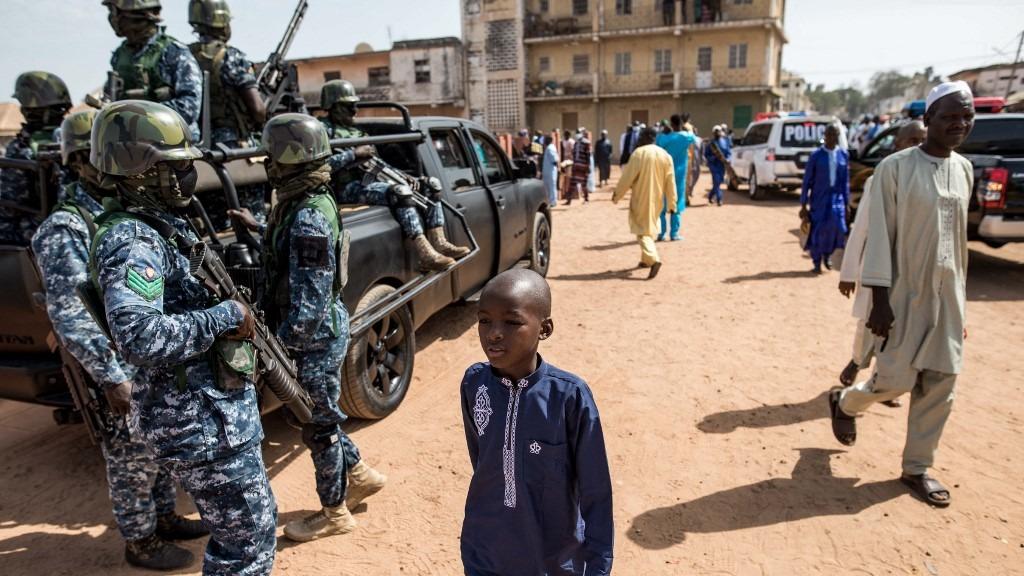
Police officers equipped with anti-riot gear were deployed to major locations following demonstrations over the worsening electricity crisis, which has left homes, businesses and public facilities without power for extended periods.
Residents have endured persistent blackouts in recent weeks, with some outages reportedly lasting more than 19 hours. The situation has disrupted commercial activities and essential services, including hospitals. Reports indicate that a patient died after electricity was cut during a medical operation.
In the capital, Banjul, hundreds of young people took to the streets, lighting candles and demanding a more reliable electricity supply. Protesters also chanted slogans against the government and attempted to march towards the State House before police intervened.
Security operatives reportedly used tear gas to disperse the demonstrators and prevent them from reaching the presidential complex.
In Serrekunda, the country’s largest town, thousands of angry youths clashed with police after a prolonged blackout lasting more than 16 hours. Demonstrators burned tyres and erected barricades on major roads in the Westfield area, disrupting movement.
Similar protests were reported in Brufut and neighbouring Brusubi, where demonstrators criticised President Adama Barrow over the worsening energy situation. The protests came despite recent assurances by the president that the acquisition of new generators would help address the country’s electricity challenges.
The deepening power crisis has plunged entire neighbourhoods across urban Gambia into darkness, while communities outside the capital have also been affected.
Power interruptions were reported in Basse and Bansang on Monday, raising concerns that the crisis is spreading beyond the main urban centres.
Meanwhile, the National Water and Electricity Company (NAWEC) has warned residents to expect further disruptions, including in provincial towns, as authorities continue efforts to stabilise the country’s electricity supply.