












By Emmanuel Nduka
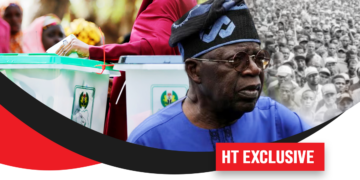
As Nigeria inches closer to the 2027 general elections, a fresh battle is brewing that many opposition camps have not bothered to be worried about. It lies within the pages of a proposed Electoral Act amendment that pro-government supporters describe as reform-driven, and critics increasingly view it as a potential threat to the integrity of the ballot.
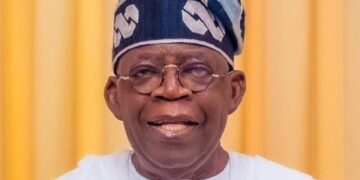
For a country whose democratic journey has been punctuated by allegations of ballot stuffing, result manipulation, voter suppression and prolonged electoral litigation after outcomes, any attempt to amend the electoral framework inevitably attracts scrutiny. But beyond the public rhetoric surrounding President Bola Tinubu’s electoral reform agenda, legal experts, election monitors, opposition figures and democracy advocates are beginning to raise questions about what they describe as subtle but potentially far-reaching changes hidden within the proposed law.
The concerns are not necessarily about what the reforms openly promise to achieve. Rather, they centre on what critics fear the amendments may quietly permit.
Just recently on ARISE Television, a former Resident Electoral Commissioner of the Independent National Electoral Commission (INEC), Mike Igini, ignited debate after drawing attention to several provisions he believes could fundamentally weaken safeguards painstakingly built into Nigeria’s electoral system over the years. “I decided that, look, let me go through the Electoral Act. And I found that whereas the last intervention we had here, we were discussing about Section 60, Subsection 3, I have now found three more dangerous provisions.
“A presiding officer has now been given the discretion to now accept ballot paper, notwithstanding the absence of the official mark, and to count that ballot paper. What that means is that before this election, politicians who now have access to the serial, I mean the security features of INEC ballot papers, they are going to produce their ballot papers. They are going to print their own ballot paper. This is dangerous, as you put it in the Electoral Act,” he worried.
According to Igini, much of the public discussion has focused on a handful of controversial clauses, while other provisions with potentially greater implications have largely escaped public attention.
One of such provisions is the proposed amendment to Section 63 of the Electoral Act, which deals with the validity of ballot papers during elections.
For years, electoral reforms in Nigeria have sought to tighten controls around ballot authentication, ensuring that only ballot papers bearing official security features are accepted and counted. Such measures were introduced largely in response to recurring incidents of ballot forgery and illegal printing of election materials by party agents.
However, analysts argue that the proposed amendment appears to grant election officials broader discretion in determining whether a ballot paper should be accepted, even where questions arise regarding official security markings.
To critics, that discretion creates a dangerous grey area.
For instance, if the authenticity of a ballot paper becomes dependent on the subjective satisfaction of a presiding officer rather than clear, objective security standards, the door may be opened to disputes capable of undermining confidence in election outcomes, they argue.
While the issue may appear technical, Nigeria’s electoral history suggests otherwise. Several elections across different states have been marred by allegations involving cloned ballot papers, fake result sheets and unauthorized election materials. This, any reform perceived as weakening existing safeguards could revive fears of large-scale ballot manipulation.
Another provision attracting scrutiny relates to the legal weight of INEC’s regulations and guidelines during election disputes.
Under Nigeria’s electoral architecture, the Electoral Act provides the legal framework, while INEC’s regulations and operational guidelines govern the practical conduct of elections. These guidelines determine how accreditation is conducted, how results are transmitted, how polling units operate and how election officials perform their duties.
Igini again argued that the proposed amendment by limiting the extent to which violations of INEC directives can form the basis of election petitions, risks creating a disconnect between electoral rules and electoral accountability.
Election analysts have also noted that if electoral officers can disregard operational guidelines without significantly affecting the validity of election outcomes, compliance may gradually become optional rather than mandatory.
Opposition politicians are expected to seize on the debate in the coming days, with fears that any dilution of accountability mechanisms could weaken public trust in future elections.
Although the ruling APC has maintained that the reforms are designed to strengthen electoral administration and eliminate ambiguities in existing laws, sceptics argue that the timing and content of some amendments warrant closer examination. Particularly controversial is a provision dealing with election petitions and evidentiary requirements.
For decades, one of the biggest challenges faced by election petitioners has been proving allegations of irregularities. Courts have repeatedly complained about the dumping of thousands of electoral documents without sufficient oral testimony, while petitioners have struggled to secure the presence of election officials who conducted polls in remote locations.
The proposed amendments seek to address some of these procedural difficulties. Yet critics contend that certain provisions may inadvertently make it harder to establish individual responsibility for electoral misconduct.
According to democracy advocates, electoral accountability is strongest when officials directly involved in the conduct of elections can be questioned and held responsible for their actions. Any legal framework that reduces such scrutiny, they argue, risks creating gaps that can be exploited.
The answer is particularly significant given the controversies that followed the 2023 presidential election, including disputes over result transmission, compliance with electoral guidelines and the interpretation of electoral laws by the courts. Those controversies exposed deep public mistrust in the electoral process and intensified demands for reforms capable of enhancing transparency rather than weakening it.
For many observers, the current debate is therefore not simply about legal drafting. It is about whether Nigeria is moving forward or backward in its quest for credible elections. Civil society organisations have consistently argued that electoral reforms should focus on strengthening technological safeguards, enhancing transparency in result management, improving voter access and increasing accountability for electoral offences.
Any provision perceived as expanding discretion, weakening verification mechanisms or reducing accountability is likely to encounter stiff resistance from stakeholders who believe Nigeria’s democracy remains too fragile for experimentation, and is being eyed by smaller African countries, as a mature democracy from which they can learn from.
The Tinubu administration has repeatedly presented its governance agenda as one anchored on institutional reforms and democratic consolidation. Yet, as scrutiny of the proposed Electoral Act amendments intensifies, questions are emerging about whether some of the changes may ultimately produce outcomes contrary to those objectives.
For now, the debate remains largely confined to legal experts, election administrators and political actors. But as details of the proposed amendments become more widely understood, the conversation is expected to move into the broader public sphere. What is at stake is the credibility of future elections, the confidence of voters and the resilience of Nigeria’s democracy itself.
In Nigeria where electoral legitimacy determines political stability, even the smallest clause of the amendment can carry consequences. This is why, for many stakeholders, the real challenge is not identifying what the proposed reforms say, but understanding what they could eventually allow.