












By Emmanuel Nduka
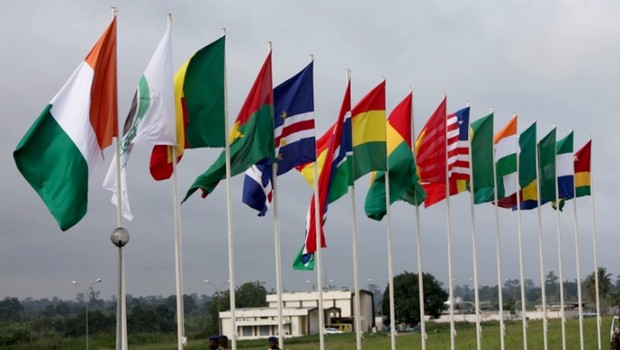
The withdrawal of Burkina Faso, Mali and Niger from the Economic Community of West African States, ECOWAS, has weakened critical mechanisms for regional integration and created fresh challenges for cooperation across West Africa, the Nigerian Presidency has said.
Special Adviser to President Bola Tinubu on Media and Public Communications, Sunday Dare, stated this on Thursday in Abuja at a policy colloquium organised by the Ministry of Defence.
Dare said the departure of the three Sahelian countries had disrupted important regional frameworks, particularly those designed to facilitate economic integration, the movement of people and the free flow of goods and services across West African borders.
Burkina Faso, Mali and Niger formally withdrew from ECOWAS in January 2025, following their joint announcement in 2024 that they would leave the regional bloc. The three countries have subsequently deepened their cooperation under the Alliance of Sahel States, AES.
“The rupture that came in 2025, when the countries pulled out of ECOWAS, created a major regional crisis,” Dare said, noting that the development had also given rise to the AES as an alternative regional framework.
He stressed that the development had complicated efforts to maintain a unified regional approach to economic integration and security, particularly amid growing instability across parts of the Sahel.
Dare also underscored the strategic importance of effective border management, describing national borders as a critical frontline for both economic development and regional security.
According to him, properly managed borders can facilitate legitimate trade and movement while simultaneously helping governments prevent criminal activities and other threats to national security.
He warned that weak border controls could create opportunities for insecurity and undermine efforts to maintain stability across the region.
The presidential aide also dismissed claims that Nigeria had closed its borders, insisting that the country’s borders remained open, although movement and commercial activities were subject to necessary controls by relevant government agencies.
“Nigeria’s borders are open,” he said, while cautioning politicians against turning border management into an electoral issue or using it to score political points.
Dare explained that the principle of open borders did not mean unrestricted movement, stressing that immigration, customs and other security agencies remained responsible for regulating activities at Nigeria’s entry and exit points.
“Our borders are critical. There are no open borders without controls. So, you must understand there is a distinction,” he said.
He maintained that effective border management was essential to achieving a balance between facilitating legitimate economic activities and protecting the country from security threats.
Also speaking at the colloquium, Minister of Defence, Gen. Christopher Musa (retd.), said the administration of President Tinubu was focused on strengthening Nigeria’s national security architecture to safeguard the country’s sovereignty, democratic institutions and development interests.
Musa said the Federal Government was committed to equipping the Armed Forces with the capabilities required to respond effectively to the country’s changing security environment.
According to him, Nigeria’s security threats have become increasingly complex, cutting across the land, maritime, air and cyberspace domains.
He therefore called for a coordinated defence strategy built around intelligence sharing, joint operations and greater interoperability among the Armed Forces and other security institutions.
“Our defence architecture must remain agile and forward-looking, with the capacity to anticipate threats, respond decisively and protect Nigeria’s territorial integrity and vital national interests,” he said.
The Defence Minister further identified technological advancement as a critical component of modern military operations, citing artificial intelligence, unmanned systems, surveillance and reconnaissance capabilities, cyber technologies and other emerging tools.
He said Nigeria must continue to invest in these technologies while simultaneously developing the manpower, military doctrine and institutional structures required to deploy them effectively.
Musa stressed that technology alone would not be sufficient, noting that the Armed Forces must also build the human capacity necessary to operate and integrate emerging technologies into Nigeria’s broader defence architecture.
He said strengthening these capabilities would enable the country to anticipate emerging threats rather than merely respond to attacks after they occur.
The Special Adviser to the Minister of Defence on Media, Leah Katung-Babatunde, said the policy colloquium was conceived as a non-partisan platform for bringing together experts and stakeholders to examine Nigeria’s evolving security environment.
She said the gathering provided an opportunity for defence experts, policymakers, technologists, academics, civil society organisations and media professionals to exchange ideas on strengthening the country’s security architecture.
According to her, the objective was not simply to identify Nigeria’s security challenges but to develop practical and sustainable solutions capable of informing public policy and strengthening the country’s long-term resilience.
She said collaboration among government institutions, the private sector, academia, civil society and other stakeholders remained essential to addressing the increasingly complex nature of national security.
The colloquium therefore provided a platform for participants to examine emerging security threats and explore innovative approaches to ensuring that Nigeria’s defence and security institutions remain prepared for both conventional and non-conventional challenges.